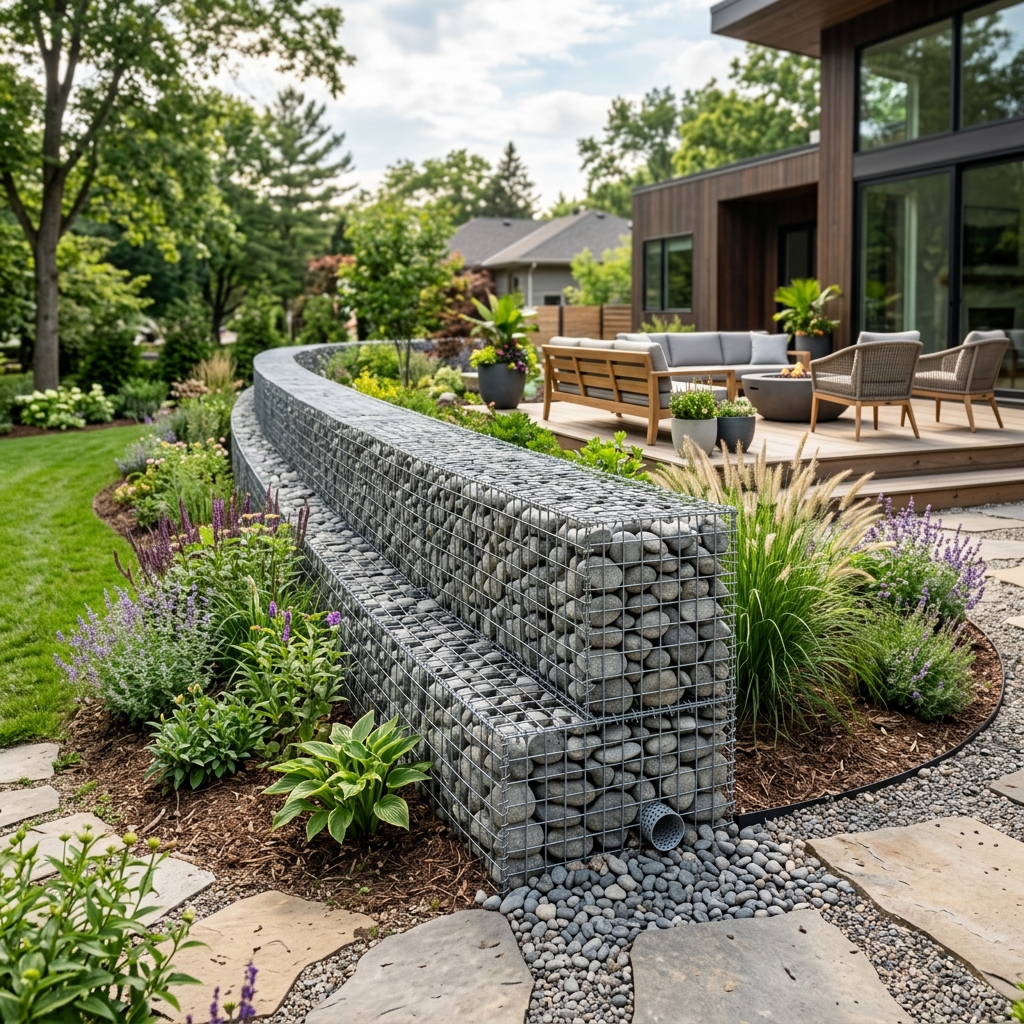
San Diego's hillside lots and canyon properties make retaining walls one of the most-requested services we do. Whether you have an unstable slope, drainage issues, or want to create usable terraced space, we engineer and build retaining walls that meet San Diego County code — and stand up to decades of California weather, heavy rains, and seismic activity.
From a small garden terrace wall in Poway to a multi-tiered engineered hillside system in Rancho Santa Fe, our guide covers every phase: site assessment, structural design, permit requirements, drainage standards, and construction oversight. Learn how to plan your project and work confidently with local builders.
🏗️Educational Planning Guidelines
📐Engineered Wall Designs
📋Permit Handling Included
💧Drainage Systems on Every Wall
✅San Diego County Code Compliant
Types of Retaining Walls We Build
Every slope is different. We match the right wall system to your soil conditions, height requirements, aesthetics, and budget.
Concrete Block (CMU) Walls
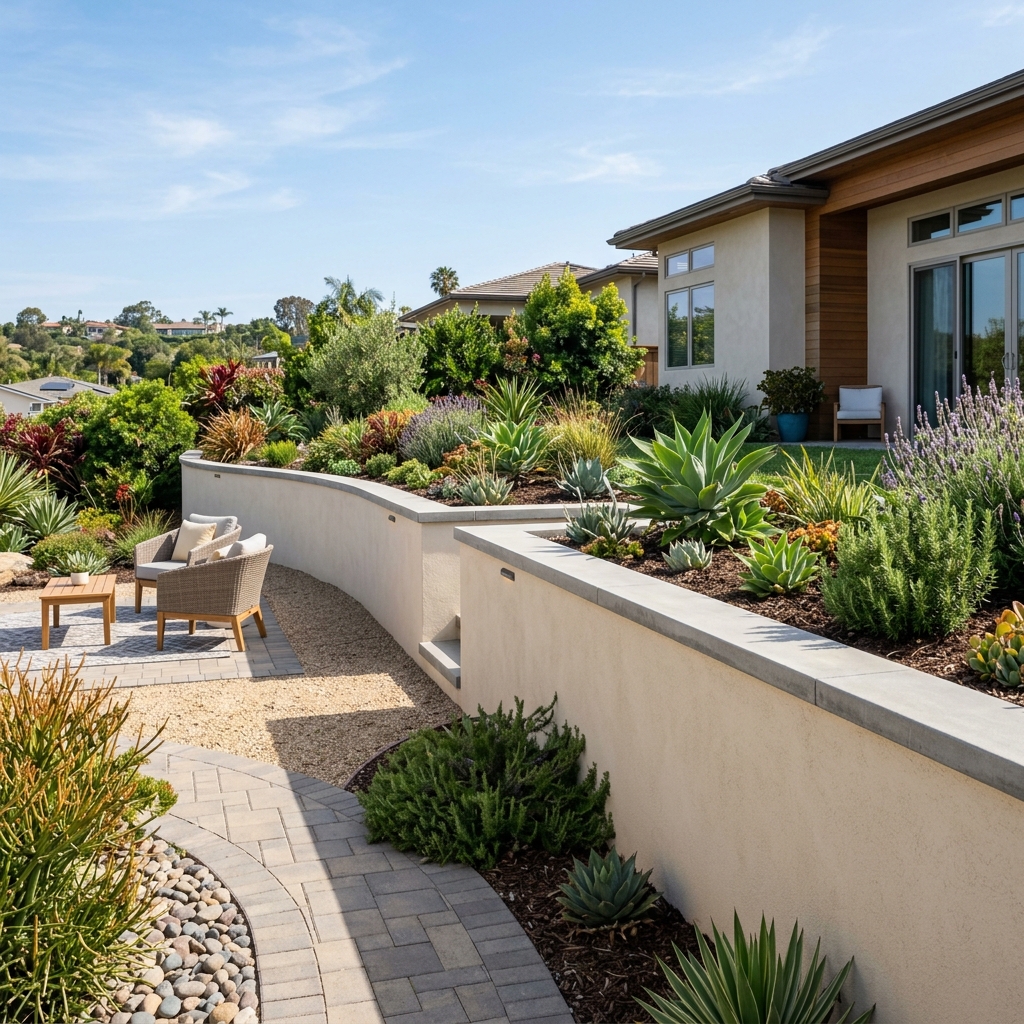
Concrete masonry unit (CMU) block walls are the workhorse of San Diego retaining. They're structurally superior to timber, highly resistant to the soil conditions found in our canyon communities, and can be finished with stucco or stone veneer to match your home's aesthetic. CMU walls meet California's strict seismic requirements and are the go-to choice for walls over 4 feet where permits and engineering drawings are required. We use interlocking block systems or traditionally mortared CMU depending on the site requirements and design goals. Lifespan: 50+ years with proper drainage.
Natural Stone & Boulder Walls
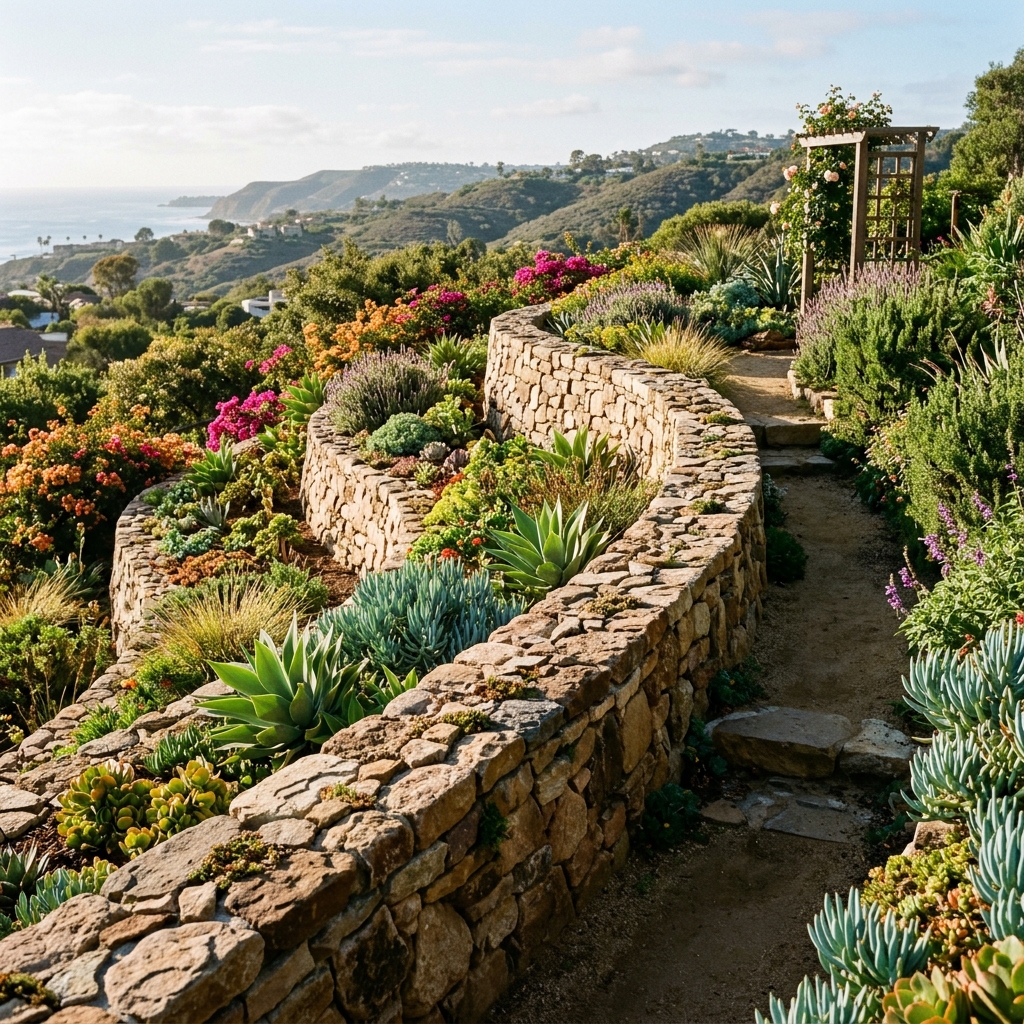
Nothing beats the timeless look of a dry-stacked natural stone or boulder wall winding through a San Diego hillside landscape. We source locally quarried decomposed granite, fieldstone, and larger boulders that complement the region's natural terrain. Natural stone walls can be dry-stacked (no mortar — relies on the interlocking physics of stone placement) or mortared for greater structural integrity at higher heights. They're especially popular in Rancho Santa Fe, Del Mar, and La Jolla where aesthetics are paramount. Our masons hand-select and place every stone for both structural stability and visual appeal.
Timber & Railroad Tie Walls
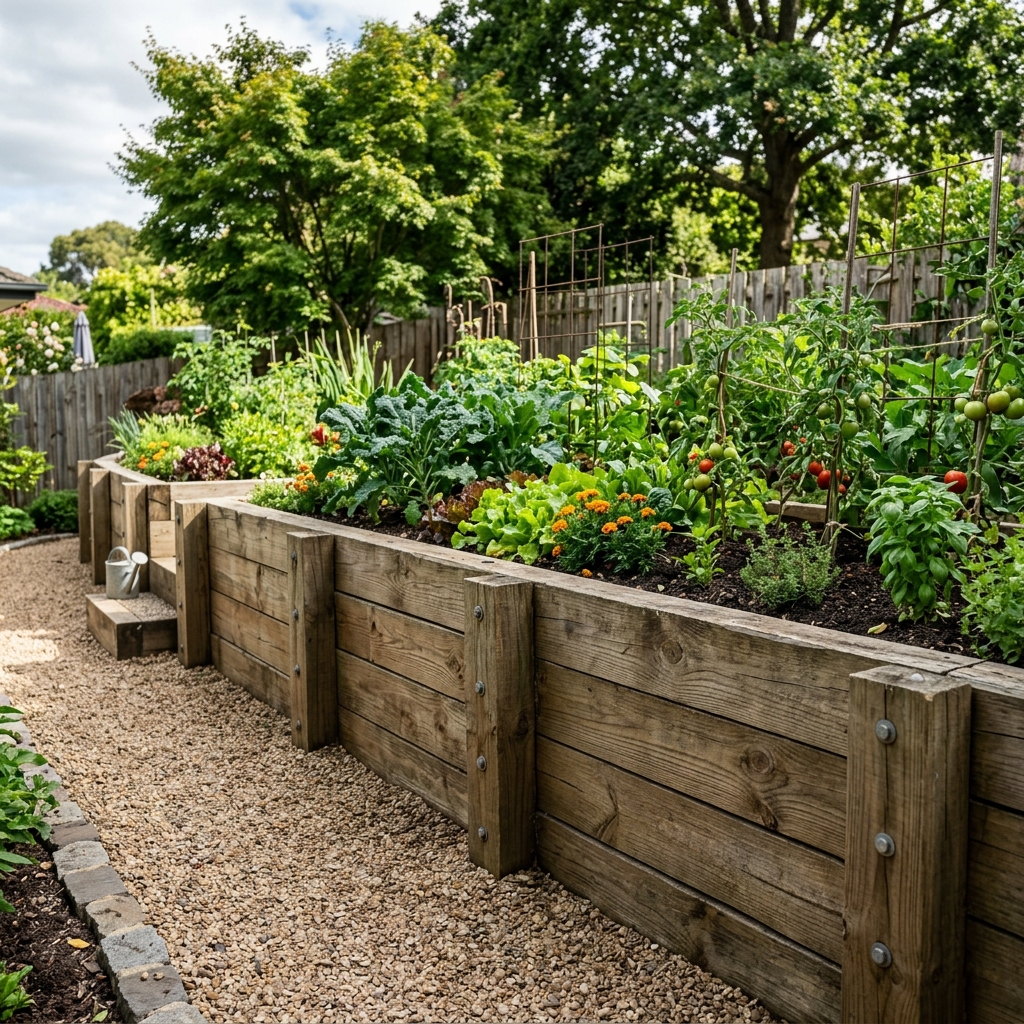
Pressure-treated timber and reclaimed railroad tie walls offer a rustic, organic look that blends naturally into garden and landscape settings. They're often the most affordable option for shorter walls (under 4 feet) and are popular for terraced vegetable gardens, raised planting beds, and gentle residential slopes. Modern pressure-treated timber is treated to resist rot, insects, and moisture — critical in San Diego's occasional wet winters. While timber walls won't last as long as concrete or stone, a well-built timber wall using quality materials can serve reliably for 15–25 years. We always include gravel backfill and drainage behind timber walls to maximize their lifespan.
Poured Concrete Walls
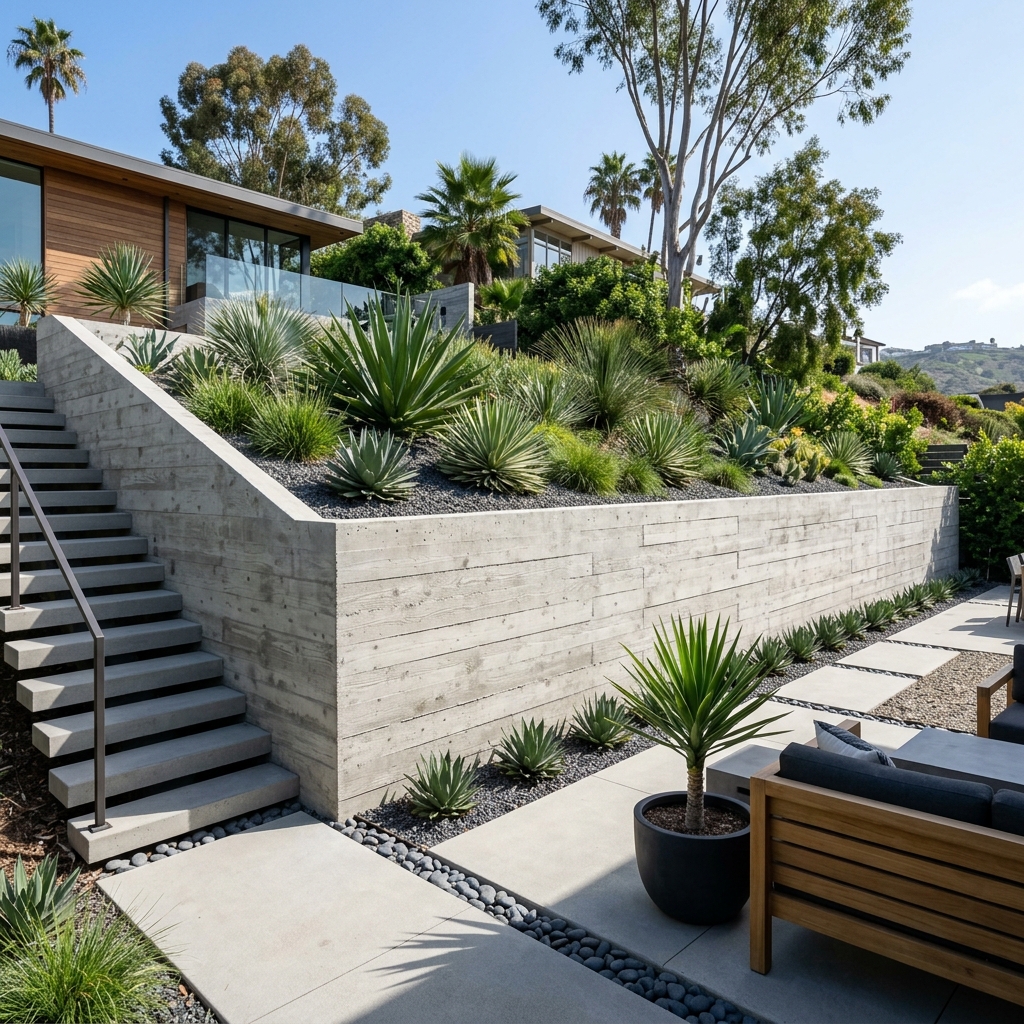
Poured (cast-in-place) concrete walls are the strongest retaining wall option available, typically used on commercial projects or residential properties with extreme grade changes or heavy surcharge loads (like walls supporting driveways or structures above them). These walls require engineered rebar placement, forming, and an inspection-ready pour — all of which we handle in-house. While more expensive than CMU block, poured concrete walls offer unmatched strength and can be formed into curves or custom shapes. They're ideal for situations where maximum structural performance is non-negotiable, such as retaining walls below structures or on heavily loaded hillsides.
Gabion Walls
Gabion walls — wire mesh cages filled with crushed rock or boulders — are an increasingly popular choice for homeowners who want an industrial-meets-natural aesthetic with excellent drainage characteristics. Because water passes freely through the rock-filled cages, gabion walls handle hydrostatic pressure better than solid walls and often require less elaborate drainage systems. They're highly durable, resistant to seismic movement (the flexibility of the wire cage actually helps), and can be planted with trailing vegetation over time for a living wall effect. Gabion walls are particularly well-suited to San Diego properties with drainage challenges or areas prone to erosion from seasonal rains.
Why San Diego Properties Need Retaining Walls
San Diego County's dramatic topography — from coastal bluffs to inland canyon communities — means that a significant portion of residential properties deal with challenging grades. Here's why so many homeowners call us for retaining wall solutions:
Hillside Lots & Canyon Slopes
Neighborhoods like Scripps Ranch, Tierrasanta, Santee, and East County are built on hillside terrain where steep slopes immediately behind or below the home are the norm. Without proper retaining walls, these slopes are perpetually at risk of erosion and, in extreme cases, slope failure. A well-engineered wall system stabilizes the grade and protects your home's foundation.
Soil Erosion from Winter Rains
San Diego's climate is characterized by dry summers and concentrated winter rainfall. When those winter storms hit, unretained slopes lose topsoil rapidly — clogging drains, washing into neighbors' yards, and undermining landscaping. Retaining walls paired with proper drainage channels that stormwater safely away from your property and prevent costly erosion damage.
Creating Flat, Usable Space
The most common reason homeowners call us: they want to turn an unusable sloped backyard into terraced, flat zones for patios, lawns, gardens, or pool decks. A thoughtfully designed retaining wall system can transform a steep hillside into multiple level "rooms" — each serving a different outdoor living purpose. This not only adds function but significantly increases property value.
Drainage Management
San Diego's clay-heavy soils drain poorly, causing water to pool against foundations and structures. Retaining walls designed with integrated French drains and gravel drainage layers redirect this water away from your home — protecting your foundation and eliminating standing water that breeds mosquitoes and damages landscaping.
*This is an educational design estimate. Exact soil conditions, setbacks, and local zoning requirements require a site survey.
San Diego Retaining Wall Permit Requirements
Navigating local building codes is one of the more stressful parts of any retaining wall project. Here's what you need to know — and how we handle it for you.
The 4-Foot Rule
In most San Diego jurisdictions — including the City of San Diego, Chula Vista, El Cajon, and unincorporated county areas — retaining walls measuring less than 4 feet from the bottom of the footing to the top of the wall do not require a building permit. However, that threshold varies slightly by municipality. Some cities measure differently or have surcharge rules when a structure or driveway sits above the wall.
Walls 4 Feet & Taller
Any retaining wall at or above 4 feet requires a building permit from the relevant jurisdiction. This involves submitting engineered drawings stamped by a licensed structural engineer, plan check review, and one or more inspections during and after construction. The engineering requirement exists because taller walls bear significantly more soil weight and must meet California's seismic design standards.
We Handle the Whole Process
Our team coordinates directly with San Diego County or your city's building department to prepare and submit permit applications, obtain engineering drawings, schedule inspections, and ensure final sign-off. You don't need to deal with the bureaucracy — we manage the entire permitting process from start to finish so your project stays on schedule.
Typical Permit Timeline
Permit review timelines vary by jurisdiction. The City of San Diego's over-the-counter review for standard retaining walls can sometimes be completed in a single day. More complex projects submitted for plan check typically take 3–8 weeks. Unincorporated county areas and smaller cities like Lemon Grove or La Mesa may have different timelines. We'll give you a realistic schedule estimate during your initial consultation.
Our Retaining Wall Construction Process
We follow a structured 8-step process on every retaining wall project to ensure structural integrity, code compliance, and a finished result that exceeds your expectations.
01
Site Assessment
We visit your property to evaluate the slope grade, soil type, drainage patterns, and any existing structures or utilities near the wall location. We measure the height requirements, identify surcharge loads, and discuss your goals for the space.
02
Design & Engineering
For walls under 4 feet, we develop a construction plan in-house. For permitted walls, we work with a licensed structural engineer to produce stamped engineering drawings that detail footing dimensions, rebar placement, drainage requirements, and wall construction specifications.
03
Permit Coordination
We prepare and submit all permit documentation to the appropriate jurisdiction, follow up with plan checkers, and respond to any correction requests. We keep you informed of the timeline and won't start construction until all approvals are in hand.
04
Excavation & Footing Prep
Vetted contractors excavate the wall footprint, remove excess soil, and prepare a level footing trench to the engineered depth. They call 811 (Dig Safe) to mark all utilities before any digging begins.
05
Drainage System Installation
Before the wall goes up, we install a perforated drain pipe at the base of the wall and compact crushed gravel drainage fill. This critical step prevents hydrostatic pressure from building up behind the wall over time.
06
Wall Construction
Our masons build the wall from the footing up, following the engineered specifications for block placement, mortar joints, rebar installation, and deadman anchors (for segmental walls). Each course is checked for level and plumb as we go.
07
Backfill & Compaction
Once the wall reaches its full height and any required inspections are passed, we backfill with compacted granular material in lifts, ensuring no excessive lateral pressure is applied to the fresh wall. We compact each lift to the specified density.
08
Finishing & Cleanup
We install any cap blocks, apply stucco or stone veneer finishes if specified, grade the adjacent soil, and remove all debris and equipment from your property. We do a final walkthrough with you to ensure everything meets your expectations before we consider the job complete.
Retaining Wall Cost in San Diego
Retaining wall costs in San Diego vary considerably based on wall height, material, drainage requirements, soil conditions, and site access. Here's a realistic breakdown based on our recent projects:
Wall Type
Cost per Sq Ft (Installed)
Best For
Concrete Block (CMU)
$45–$65
Most residential walls, great structural performance
Wall height: Taller walls require deeper footings, more material, and engineering — cost per square foot increases significantly above 4 feet.
Drainage complexity: Sites with heavy clay soil or poor natural drainage require more extensive French drain systems.
Soil conditions: Rocky or expansive soils require additional excavation equipment and time.
Site access: Tight access for machinery in canyon lots or steep driveways can add cost.
Permitting & engineering: Required for walls over 4 feet; engineering drawings typically add $800–$2,500 depending on complexity.
Number of walls: Multi-tiered retaining systems are more efficient per square foot than single isolated walls.
The average retaining wall project in San Diego ranges from $5,000 for a short garden wall to $40,000+ for a full hillside retaining system. We provide detailed written estimates at no charge.
Backyard Planning Resources
Quick reference tools and code checklists for San Diego County homeowners.
📋
San Diego Permit ChecklistRetaining walls >4ft require engineered plans and city permits.
📐
3D Landscape Layout GuideDraft your elevations and setbacks before finalizing materials.
🌵
Water-Wise Native PlantsCoordinate Cleveland Sage, Agave, and Salvia for low-water designs.
Common questions from San Diego homeowners about retaining walls, permits, costs, and materials.
How tall can a retaining wall be without a permit in San Diego?
In most San Diego jurisdictions, retaining walls up to 4 feet in height (measured from the bottom of the footing) do not require a permit. Walls 4 feet and taller require a building permit, engineering drawings, and inspections. Some cities like Chula Vista and Carlsbad have slightly different thresholds — always check with your local building department. When in doubt, our team can advise you on the specific rules for your municipality.
How long does it take to build a retaining wall in San Diego?
Most residential retaining wall projects take 3–7 days to complete once permits are obtained. The permitting process typically takes 2–6 weeks depending on the jurisdiction and complexity of the project. Smaller walls that don't require permits can often be started within 1–2 weeks of contract signing, depending on our schedule.
What is the best material for a retaining wall in San Diego?
Concrete masonry unit (CMU) block walls are the most popular in San Diego due to their durability, cost-effectiveness, and ability to handle the local soil conditions and seismic requirements. Natural stone provides a more aesthetic finish. The right choice depends on your budget, the wall height, and your design preferences. Our team will walk you through the trade-offs for your specific project during your free estimate.
Do retaining walls need drainage?
Yes — drainage is critical for retaining wall longevity. Without proper drainage, hydrostatic pressure from water-saturated soil can cause walls to lean, crack, or fail — sometimes catastrophically. We install perforated drain pipe (French drain) and gravel backfill behind every retaining wall we build, regardless of wall type or height. Proper drainage is not optional; it's foundational to a long-lasting wall.
Can I build a retaining wall myself in San Diego?
Small decorative walls under 3 feet can be DIY projects. However, structural retaining walls — anything holding back significant soil weight or over 4 feet in height — should be built by remodeling educators using engineered designs. San Diego's hillside soil conditions and seismic zone requirements make professional construction important for safety and code compliance. Improperly built retaining walls can fail during heavy rains, causing property damage, injury, and significant liability.
Retaining Wall Service Areas
We build retaining walls throughout San Diego County, including: